By Amanda Graham
When did protecting children from discomfort begin to replace preparing them for life?
A recent headline caught my attention: more than a quarter of English primary school children cannot swim 25 metres. BBC analysis of Department for Education data found that only 72% of Year 6 pupils met this benchmark in 2024–25, with just 70% able to demonstrate safe self-rescue. In schools serving disadvantaged communities, those figures fell to around 55% and 50%.
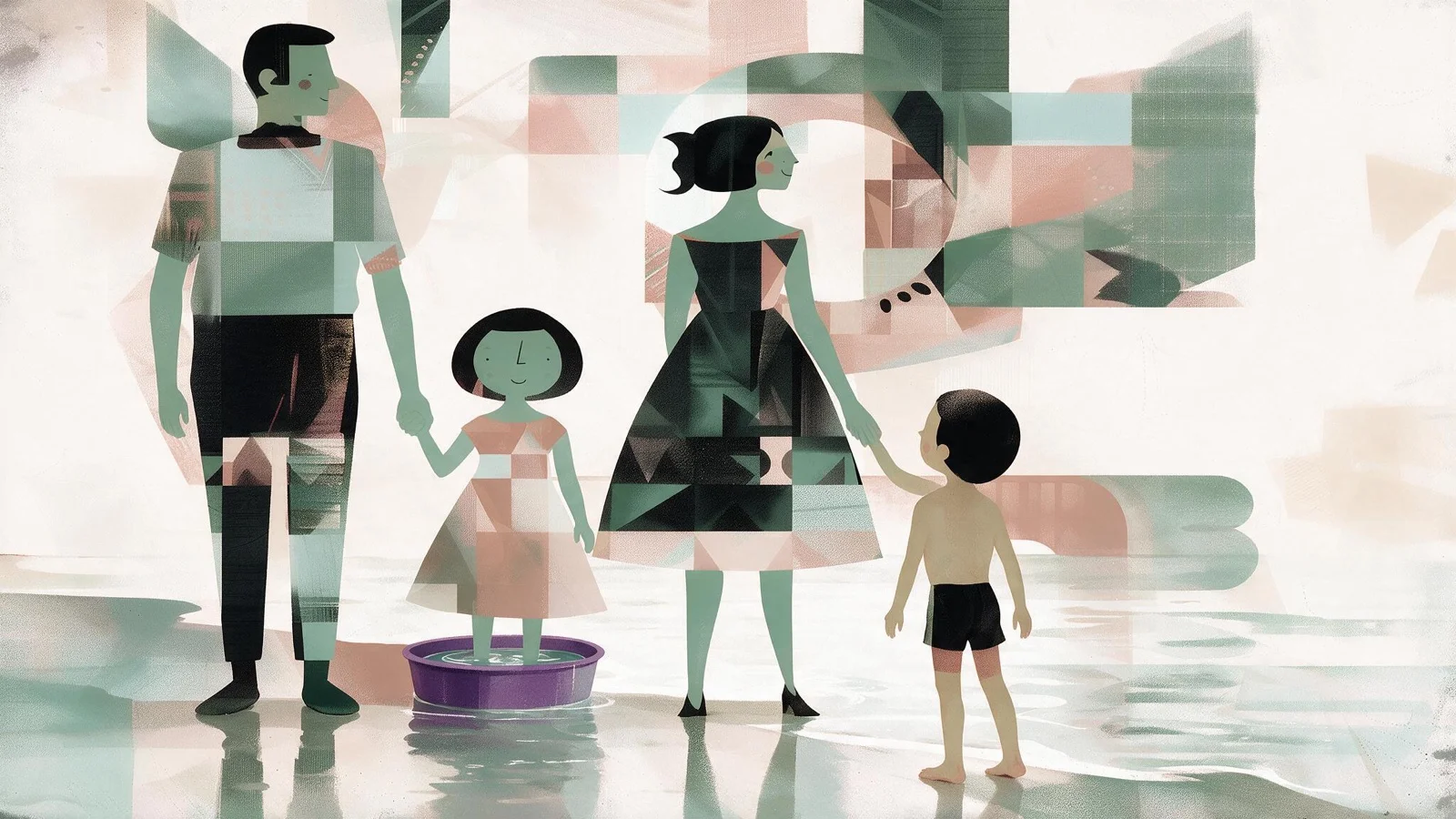
It took me back to my own primary school in 1970s Sunderland, where weekly swimming lessons were simply part of the week. We walked to the municipal baths, endured the overpowering smell of chlorine, and dreaded the infamous purple foot bath meant to ward off verrucas. The thirty-minute lesson wasn’t optional, and whether it was comfortable wasn’t really the question.
Swimming is, in fact, still mandated in England’s National Curriculum — schools must teach competent swimming and water safety by the end of Key Stage 2. But practical obstacles keep getting in the way: finding pool time, transport, staffing, curriculum pressure, and the rising cost of keeping public pools open at all.
This creates a real inequality. Wealthier children often arrive at school already able to swim, having had private lessons beforehand. Children without that advantage depend entirely on what the school can provide. When schools struggle to deliver, it is exactly those children who lose out twice.
What discomfort was for
I think about my father teaching me to swim in a cold Northumberland river — uncomfortable, certainly, but not traumatic. There is an important difference between the two, and it is one I think we have started to lose sight of.
Sir Michael Rutter, one of the founding figures in resilience research, defined resilience as “relatively good outcomes despite risk and adversity.” Ann Masten called it “ordinary magic” — something that grows out of relationships, competence, problem-solving and community, not extraordinary toughness.
Resilience develops through a combination of support and challenge. Research into British Forest School programmes shows that uncertainty, problem-solving, physical challenge and manageable risk all foster psychological resilience and social development. Physical activity is linked to better coping and self-regulation in adolescents. The key ingredient seems to be mastery — attempting something that feels impossible, persisting, and discovering you can actually do it.
It makes me wonder what else schools once quietly provided — PE, cooking, woodwork, walking somewhere independently, managing a forgotten PE kit, sitting with disappointment — that we are gradually removing in the pursuit of measurable academic outcomes.
What I see in the therapy room
After more than thirty years working with adolescents, I do notice a diminished tolerance for ordinary discomfort in many young people I meet today. But I am cautious about declaring any generation less resilient than the last. Today’s adolescents are carrying pressures mine never had to: constant digital comparison, permanent connectivity, intense academic competition, housing insecurity, and the long shadow of the pandemic.
Developmental milestones that used to belong to late adolescence now seem to stretch into the twenties, and sometimes beyond. A 2025 University of Cambridge study mapping brain development across the lifespan identified major transition points at ages 9, 32, 66 and 83 — suggesting neural reorganisation continues until roughly 32. Office for National Statistics figures show the median age for leaving the parental home shifted from 21 in 2011 to 24 in 2021, with 61% of adult children still living at home being male.
The question worth asking
I am not trying to romanticise 1976. Progress does not need to mean discarding everything that came before it. But there was a genuine wisdom in simply assuming children were capable. Contemporary resilience research backs that instinct in a more sophisticated way: resilience grows through the combination of support and challenge, and through trusted adults who are sometimes willing to say “yes, this is difficult” and “try again,” rather than removing every obstacle before a child reaches it.
What education is for matters here. If school exists purely to produce exam results, then everything outside that can be trimmed away without much thought. But if it exists to prepare young people for a life that will, inevitably, be inconvenient, uncertain and difficult at times — then experiences like these deserve to sit closer to the centre, not as hardship for its own sake, but as capability, practised.